
Classical Architecture and the Far-Right: A Modern Propaganda Tool?
Classical architecture is making a comeback—not just for its beauty, but as a cultural and political tool embraced by far-right movements. Across history and fiction, from Mussolini’s fascist Italy to Trump’s “Make Federal Buildings Beautiful Again” order, and the dystopian imagery in The Handmaid’s Tale, neoclassical forms have been used to project power, tradition, and control. This raises an urgent question: can classical architecture ever be separated from its far-right associations and used purely as a celebration of timeless design?
Old walls, new agendas: classical architecture today is more than a stylistic choice — it can be a strategic tool for political propaganda, promoting nationalism, tradition, and anti-democratic values. This revival reflects a longing for a past defined by cultural homogeneity and hierarchical social order.
Fascist Architecture as Precedent
To explore the reasons behind the far-right’s affinity for classical design, we must first look at the architecture of 20th-century authoritarian regimes. Fascist governments often weaponized neoclassical forms to legitimize their ideals of order, control, and purity.
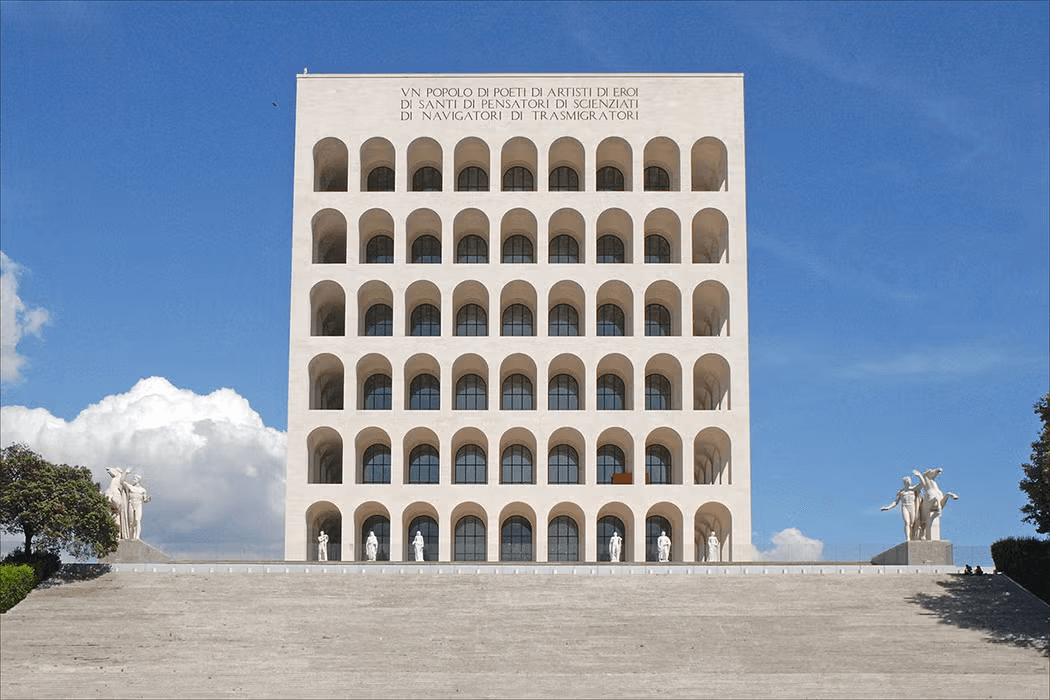
Take Mussolini’s Italy, for example. The Palazzo della Civiltà Italiana — also known as the Square Colosseum — embodies Rationalist Neoclassicism. Its symmetrical structure, arches, and Roman references glorified ancient imperial ideals, visually reinforcing Mussolini’s narrative of national greatness and centralized power.
From Fascism to Today: Political Aesthetics Reimagined
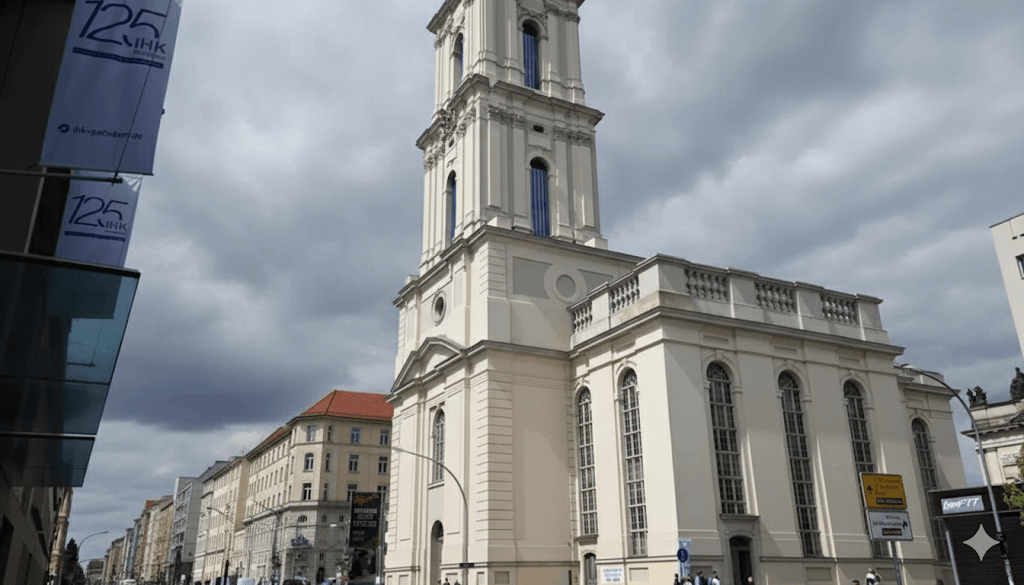
Bringing this into the present, it’s no coincidence that far-right movements continue to embrace classical architecture. These forms serve as shorthand for “Western values” — patriarchal family structures, cultural and racial homogeneity, and rigid tradition. Consider Potsdam’s Garrison Church in Germany, whose reconstruction is supported by nationalist groups. What appears to be an act of cultural preservation is, in fact, a reassertion of ideological nostalgia for social order and ethnic unity.
The U.S. Example: Beauty as a Political Mandate
In 2020, the Trump administration issued an executive order titled “Make Federal Buildings Beautiful Again”, mandating that all new federal buildings in Washington, D.C. adopt classical or traditional styles. Modernism — dismissed as “ugly and strange” — was effectively sidelined in favor of Greco-Roman motifs associated with “American greatness.”
The U.S. Supreme Court Building, completed in 1935, exemplifies this aesthetic: Corinthian columns, a grand staircase, and allegorical sculptures all convey an image of order and virtue — whether or not it aligns with contemporary democratic ideals.

Why the Rejection of Modernism?
Given this context, it’s no surprise that far-right groups reject modern architecture, which breaks from tradition in favor of simplicity, function, and forward-thinking design. Modernism is often associated with socialism or utopian ideals — not the glorified past many conservative ideologies seek to reclaim. Rather than replicate historical grandeur, modernist architecture envisioned a future built on equity and innovation.
The Handmaid’s Tale: Fictional Echoes of Real-World Aesthetics
So what does all this have to do with The Handmaid’s Tale?
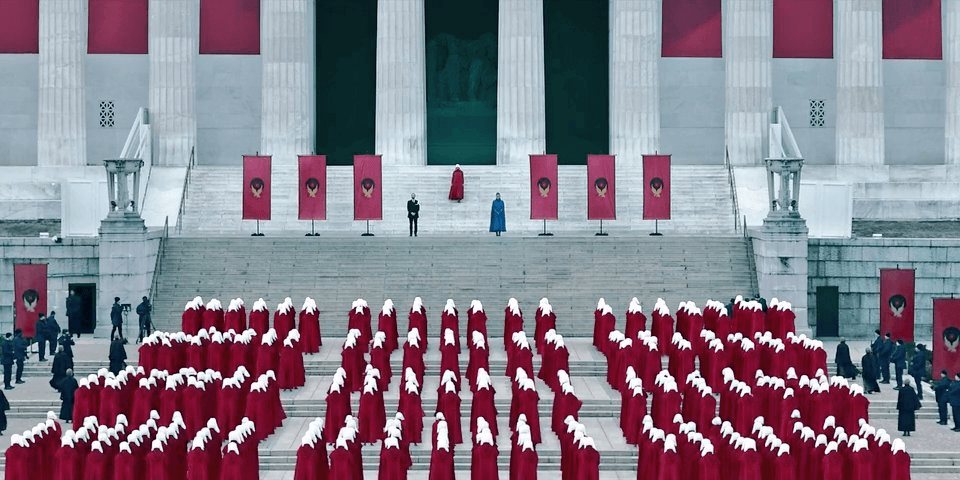
In the dystopian regime of Gilead, architecture is an instrument of control. Elite homes and government buildings feature Colonial Revival and Neoclassical styles: symmetrical facades, heavy paneling, and a cold, dignified order that mirrors the regime’s values. These spaces are beautiful yet emotionally sterile — a perfect reflection of an oppressive ideology wrapped in tradition.
Just like the far-right’s aesthetic playbook, Gilead’s architecture uses classical beauty as a façade for authoritarian control. What looks virtuous is, in fact, deeply ideological.

Can We Reclaim Classicism?
Despite its political associations, many contemporary architects use classical forms to honor craftsmanship, urban context, material richness and formal harmony. A column can still stand for strength without evoking empire. Architecture, like any language, can be reinterpreted – the same elements once used to oppress can also be reclaimed to inspire and provoke new ideas.
Can we truly separate classical architecture from the weight of its political past — or is it forever tied to the ideologies that once shaped it? Share with us in the comments! 👇